Access management for EV charging
Simplified how admins configure EV charging access, pricing, and driver eligibility reducing setup related support tickets by 30%
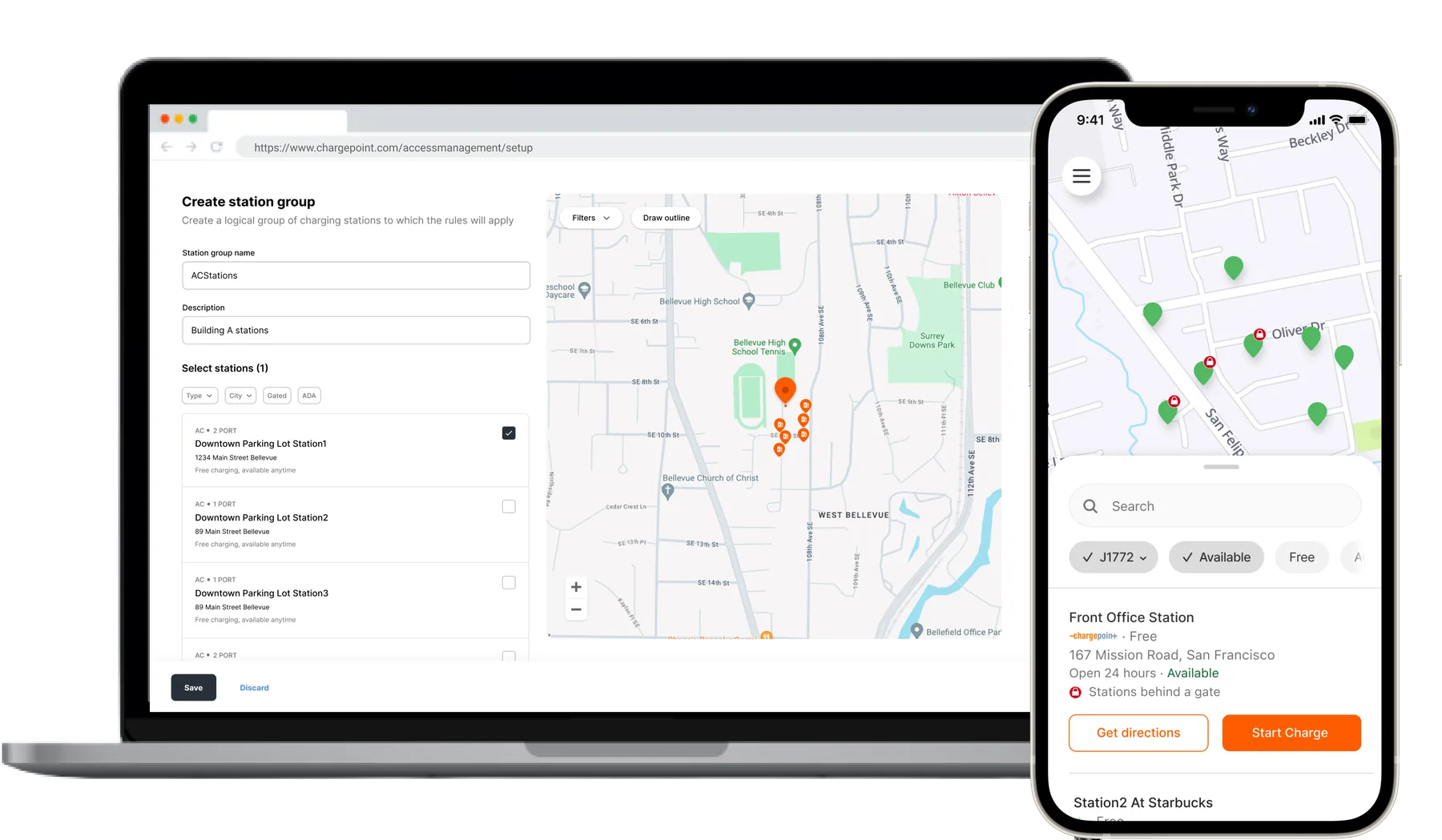
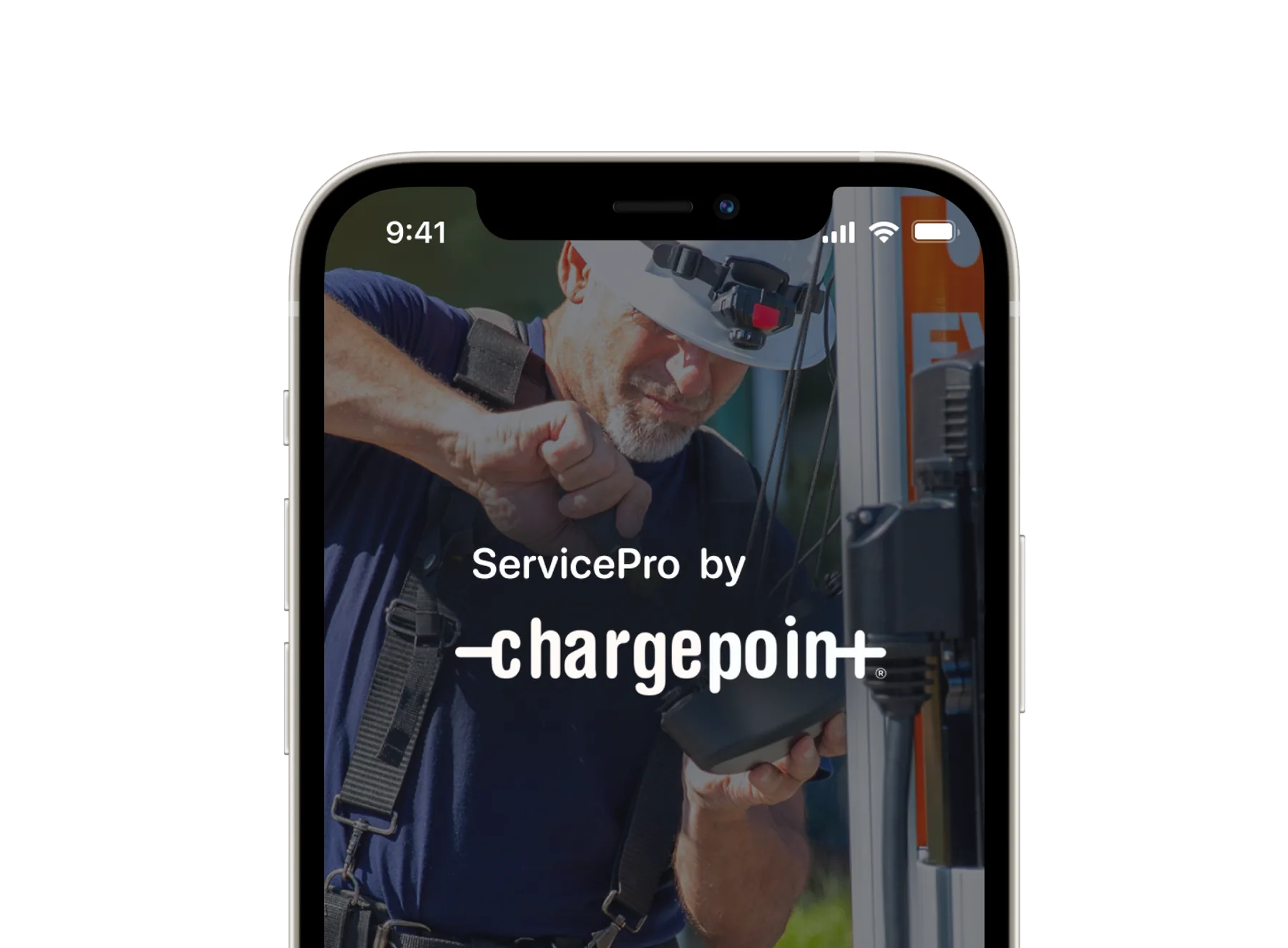
ChargePoint's admin portal was critical for workplaces to manage access on EV charging stations and help drivers use those stations. Over time it had grown into a powerful but complex, fragmented tool with outdated patterns. It worked well for power users like support agents who knew where everything lived, but left everyday station admins struggling with even the most basic tasks — like setting access policies and approving drivers.
This led to an operational bottleneck: support was swamped with 20k setup-related cases, and stations took up to 6 months before becoming available to drivers. My goal was to redesign the admin portal into streamlined, scalable workflows that help admins effortlessly set who can charge, when, and at what price — ensuring drivers get reliable information about charging access. The portal was built on legacy code soon to be retired, so all new development happened in a new framework, which we took as an opportunity to create a shared design system.
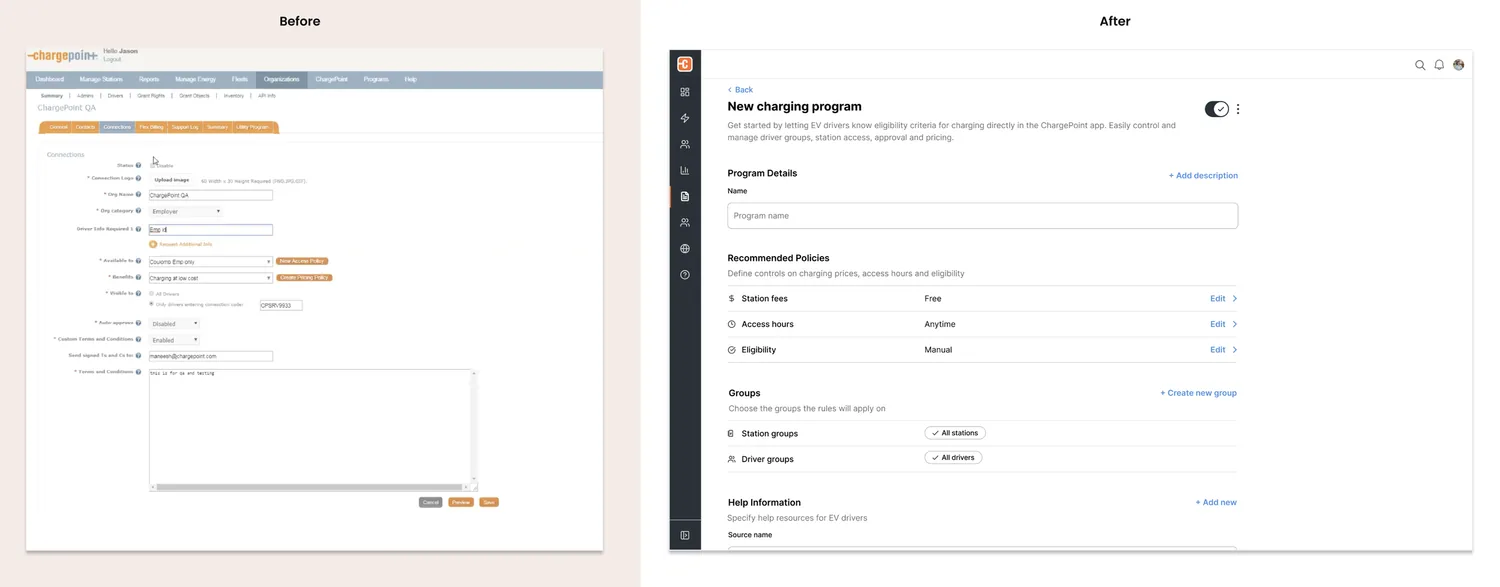
Three kinds of admin, one fragile chain
I mapped the ecosystem around every charging program and found three users depending on the same setup:
- Novice admins — new to charging programs.
- Advanced admins — need bulk actions to efficiently operate at scale.
- EV drivers — need the app to reliably show the right access and pricing set by admins.
Delays and usability errors while setting up station charging policies cascaded into stranded EV drivers desperately looking for a charge, angry driver messages and emails to admins, and HR escalations. The admin portal let admins create station and driver groups and apply different policies to them — access hours, pricing shown in-app, driver eligibility, and station visibility.
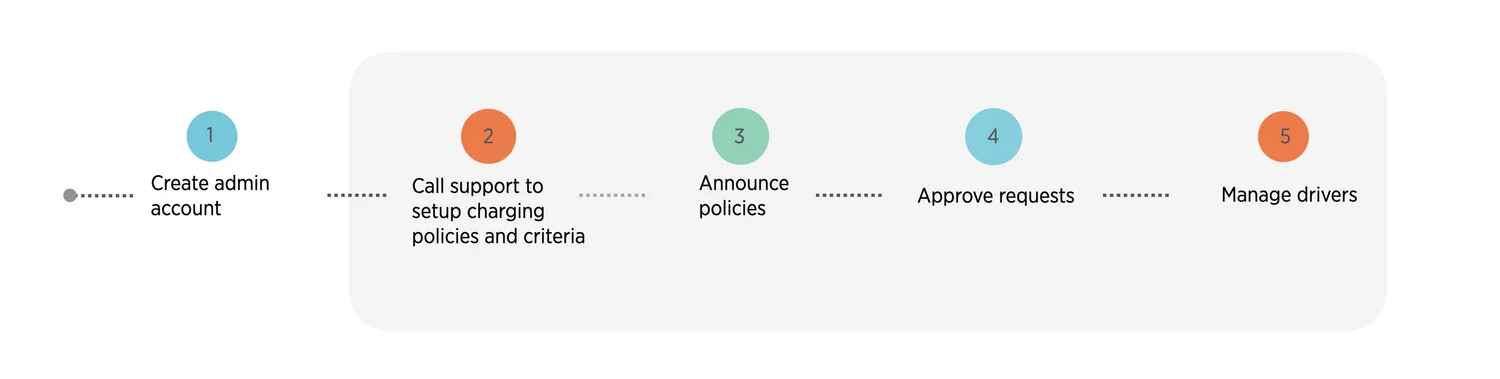
Four rules to guide the redesign
One workflow instead of fragmented tabs.
Provide contextual help and smart defaults when possible.
Reflect admin actions instantly across driver and support touch points.
Surface only what's relevant for the user's experience level.
Three problems, redesigned end to end
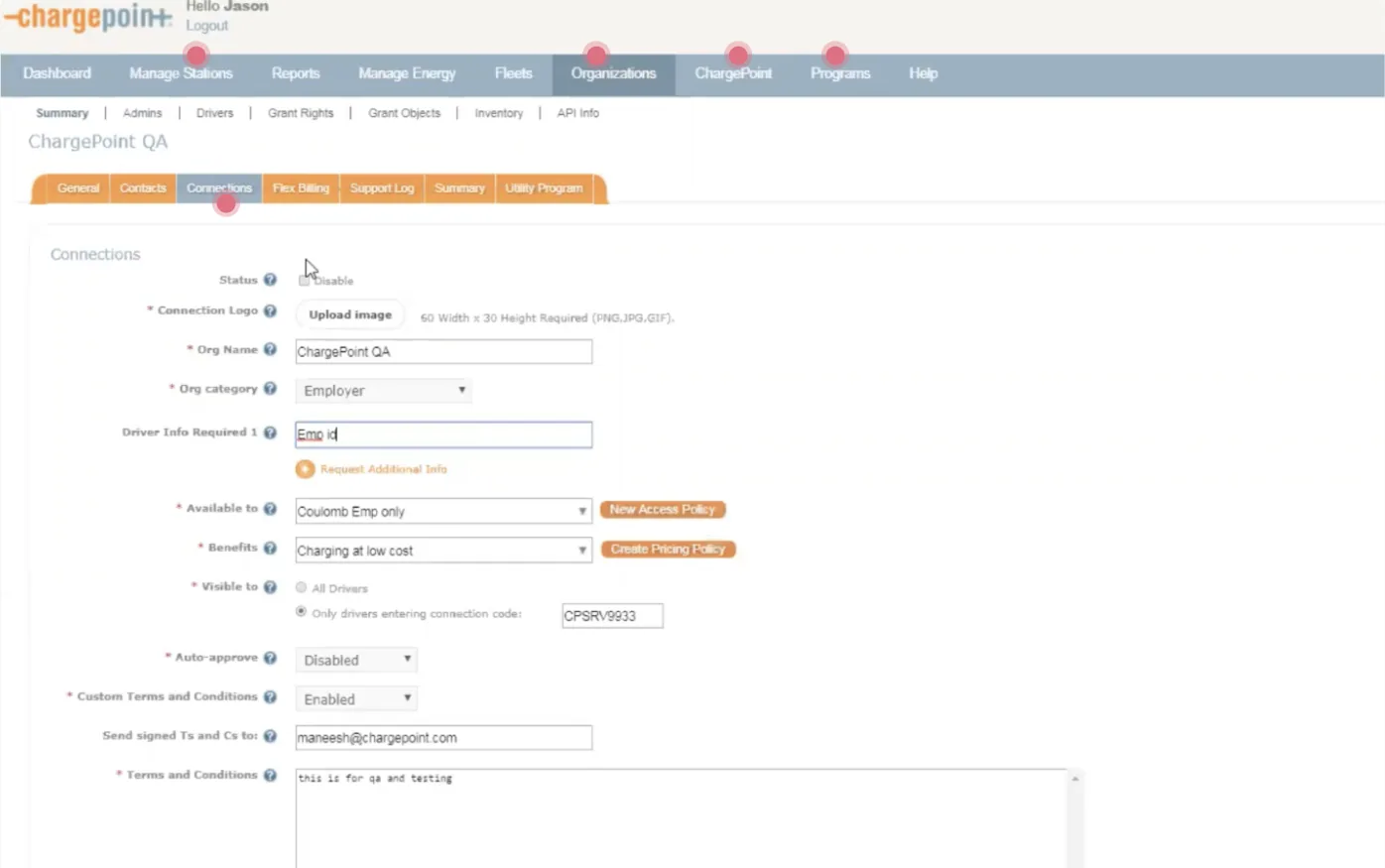
Hopping across tabs to set up hours, pricing and eligibility
Admins needed to move between four disconnected screens — each living in its own tab — to configure a single charging program. It resulted in knowledge gaps and workflow gaps.
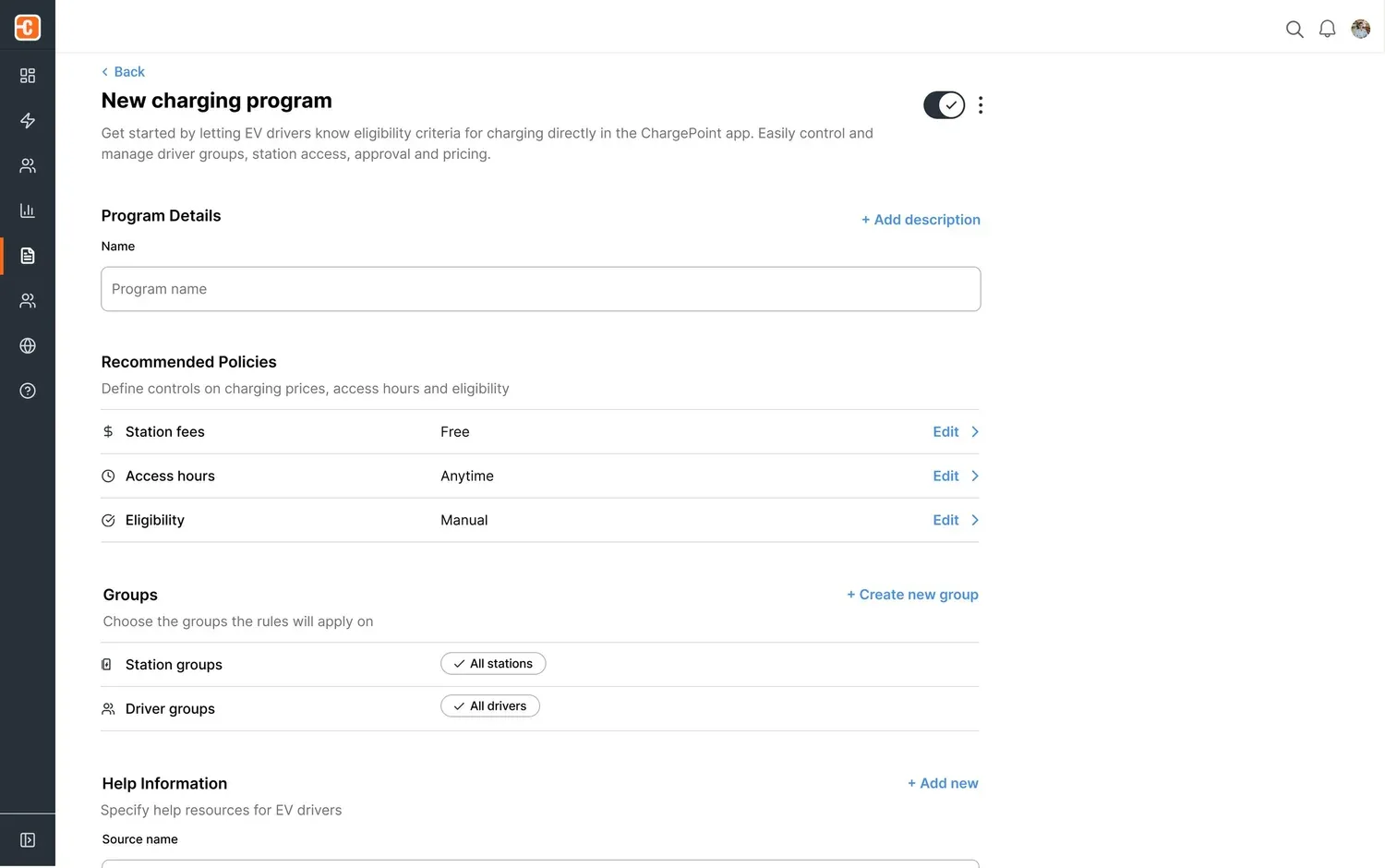
A streamlined single-form workflow to set up all the policies
Introduced progressive form patterns where each policy — hours, pricing, eligibility — expands with helpful defaults. Enabled bulk actions for large-scale admin operations.
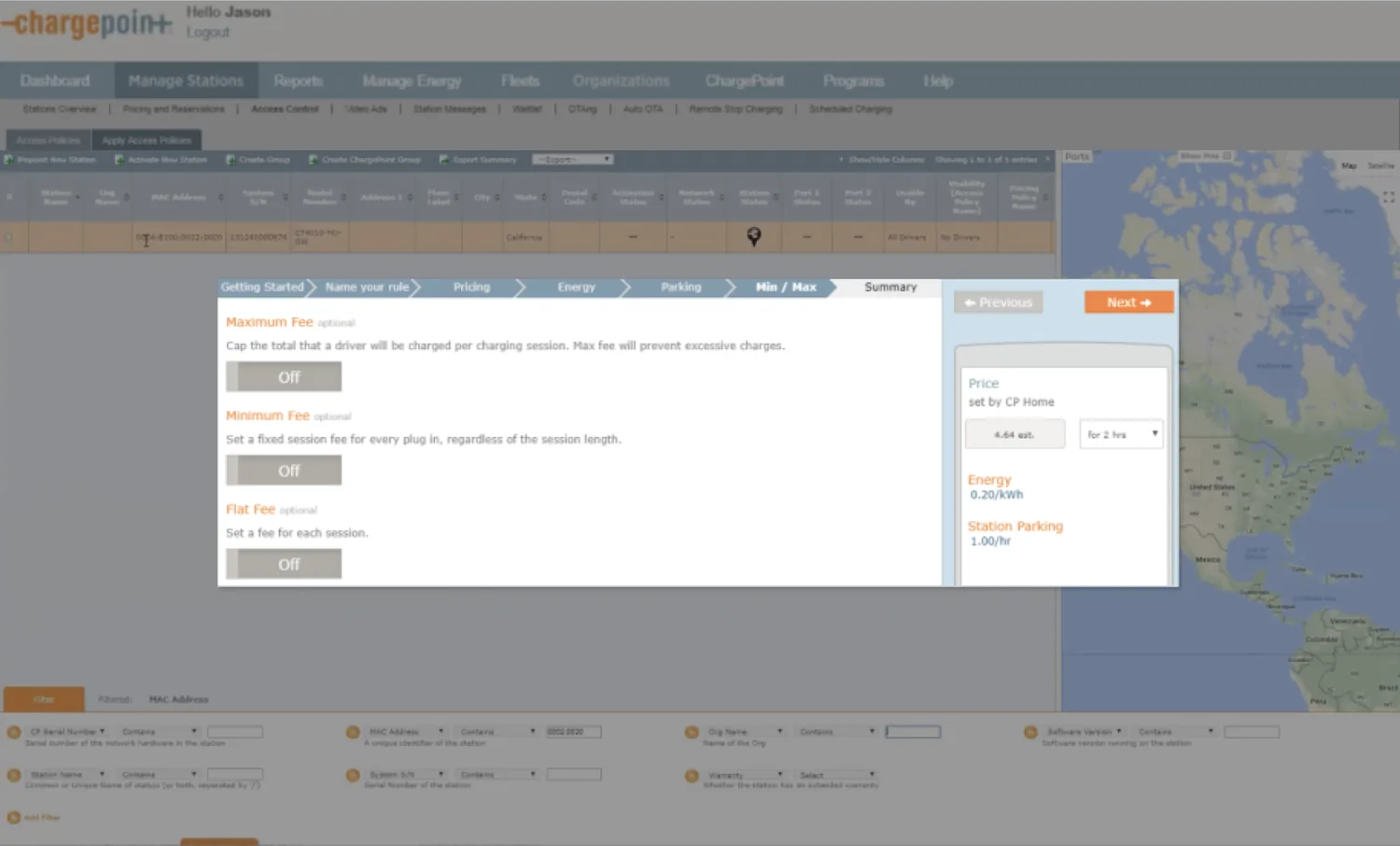
Multi-level pricing was the most complex and confusing
Multilayer pricing — peak, off-peak, idle, employee vs. guest tiers — was powerful but intimidating. It created a high dependency on support, who helped admins break even or get a competitive edge.
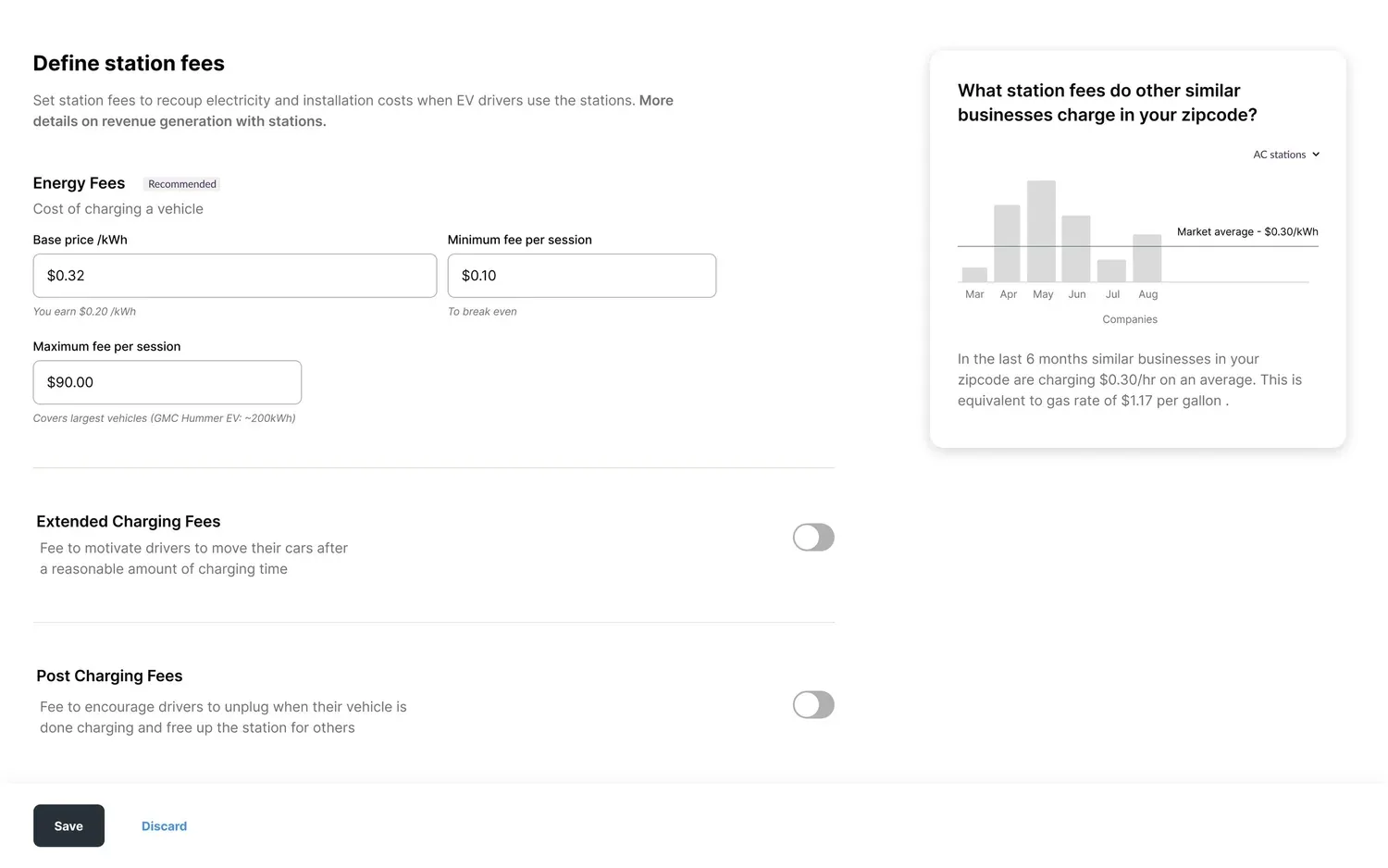
A self-serve experience with contextual help
Inline explanations, examples, and benchmark comparisons (e.g., "what similar businesses charge") so admins could price confidently on their own.
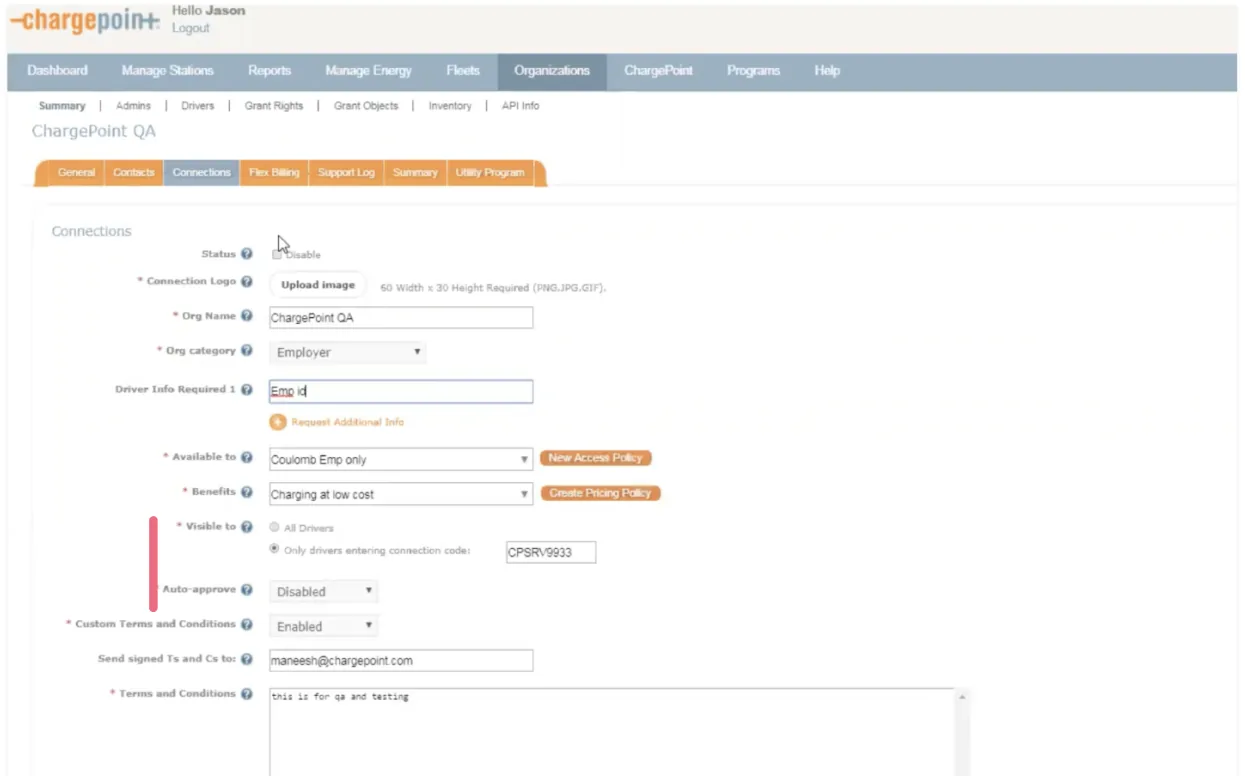
A time-consuming manual driver-approval process
Admins preferred a hands-off way to add drivers, but auto-approval made the network secret behind code numbers — hard for drivers to find, and hard to track if codes were misused or leaked, since anyone with a code was added automatically. So admins fell back to slow manual approval. Workplaces needed "employee-first" rules.
Flexible approval automation
Auto-approve trusted groups, while keeping manual review options for others. Admins gained confidence and time back.
One taxonomy across three surfaces
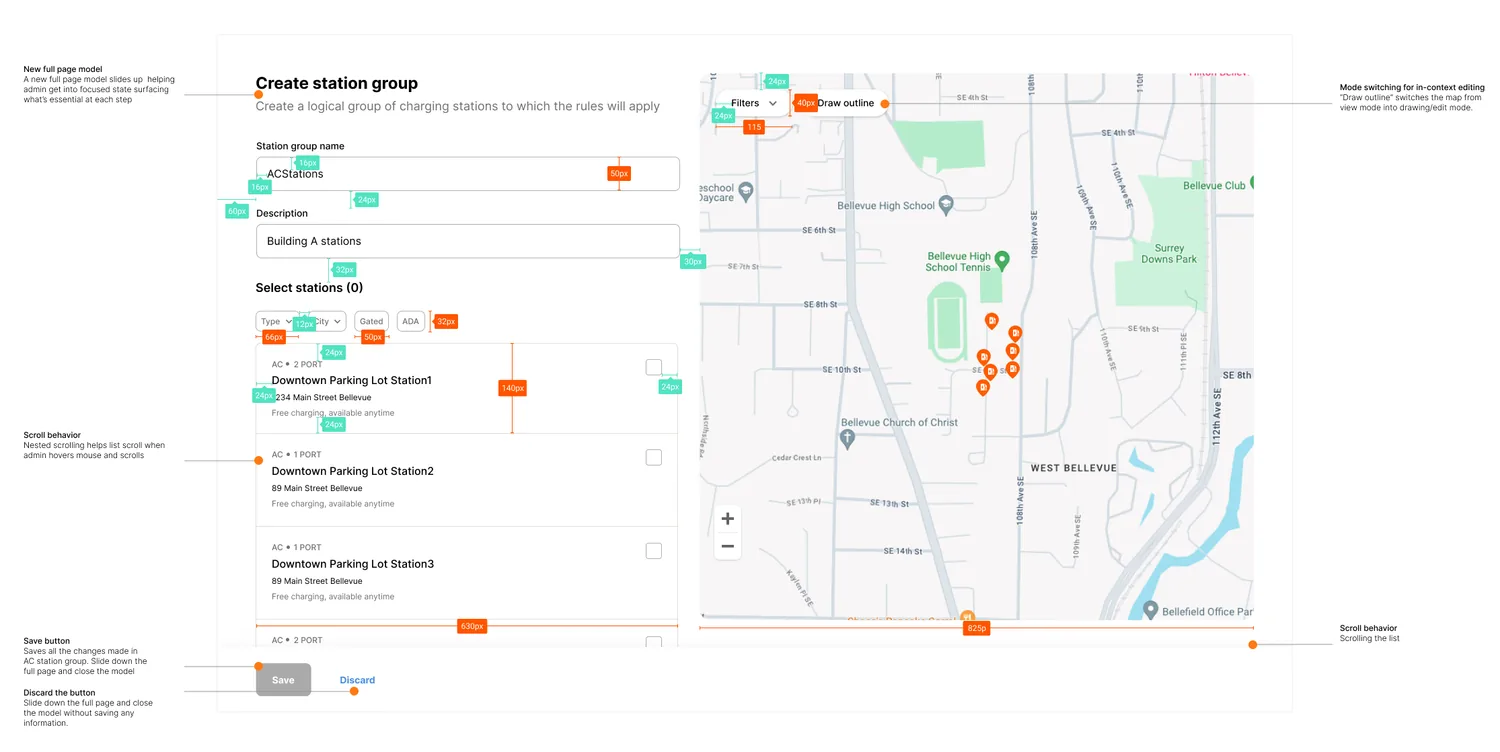
With the legacy codebase being retired, I created and documented a unified design system for admins, support teams, and EV drivers. Shared taxonomy, patterns, and reusable components made the system scalable and increased product velocity. I detailed implementation notes in Confluence and shared my organized Figma files with developers.
Admin decisions, visible in the driver app
The changes in the admin portal opened up opportunities to show richer information in the driver app, which helped drivers:
- Easily find eligible stations they can charge at.
- Trust the app.
- Easily request access to start a charge.
A self-service platform admins trust
The redesign turned Access Management from a support-heavy system into a self-service platform — a 45% increase in subscription revenue and a 20% reduction in support call volume. Admins regained control, drivers gained clarity, and support teams could focus on growth instead of troubleshooting.
Simplicity isn't about removing features — it's about aligning systems with human expectations. Designing for admins meant designing trust into every decision.